5 Telltale Signs You’ve Outgrown Your ERP

Posted by Indusa on Oct 19, 2015 7:00:00 AM

While business growth is undoubtedly something to be celebrated, that doesn’t mean it comes without its challenges: you have to hire more staff, oversee more transactions, analyze more data – sometimes your organization is growing faster than you can keep up with. Software that worked for you last year may no longer be an efficient or practical solution. One such system might be your enterprise resource planning (ERP) software.

Outgrowing an ERP is a natural part of growth for every small to mid-sized business, so you can be prepared when the time comes. After numerous ERP upgrades and implementations, we’ve decided to compile a guide to help you better understand the warning signs of outgrowing ERP software. Here are a few key issues to consider when determining whether or not you’ve outgrown your ERP:

Read More

Topics: ERP

Legacy Systems – Are You Showing Your Age?

Posted by Indusa on Sep 28, 2015 7:00:00 AM
Technological innovations happen at lightning fast speed today, changing customer and employee expectations multifold. While everyone seems to be flaunting the latest gadget, it is surprising that there are plenty of systems and applications at the core of many businesses’ processes that are still outdated.
Read More

Topics: ERP

Are You Ready for the Digital Customer?

Posted by Indusa on Sep 25, 2015 6:30:00 AM
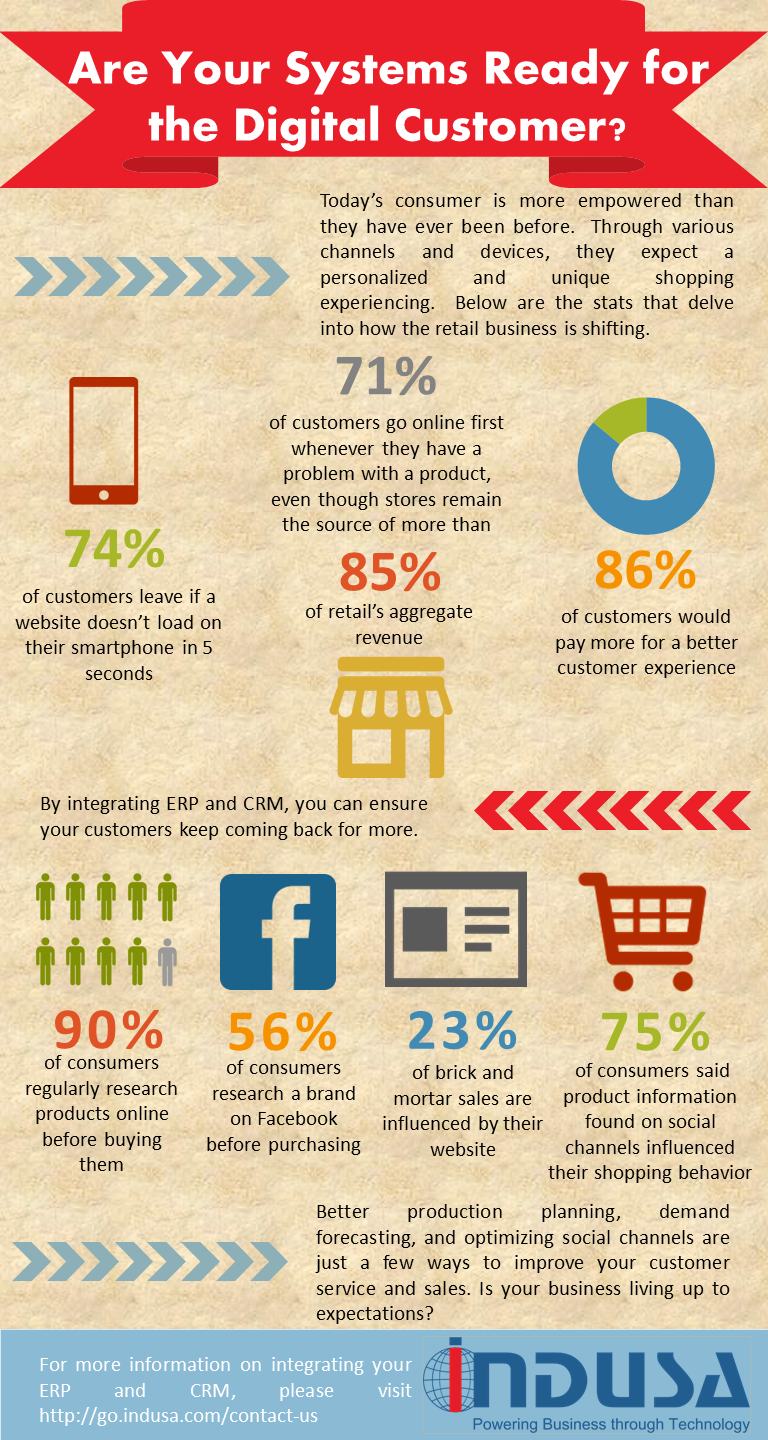
Retailers have a major task at hand: offer a unique and personalized shopping experience to the newly empowered digital consumer. While having an effective digital strategy in place is paramount to achieving this, integrating your ERP and CRM systems, provides the tools for you to manage an omni-channel experience that boosts customer loyalty.
Read More

Topics: CRM, ERP

Integrating ERP and CRM: A Dynamic Duo for Retailers

Posted by Indusa on Sep 24, 2015 8:00:00 AM

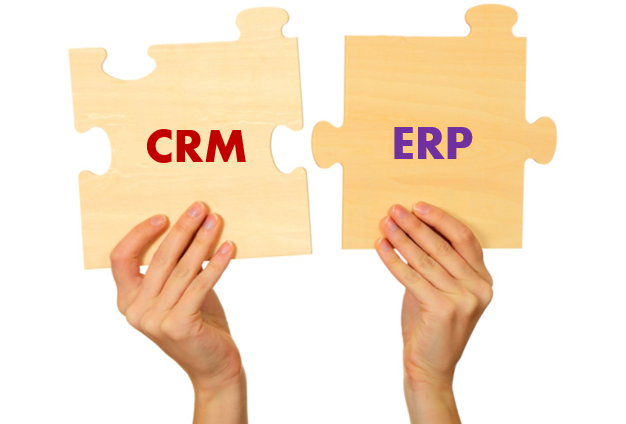
Enterprise resource planning (ERP) and customer relationship management (CRM) software are both integral aspects of any retailer’s business strategy. With ERP, your business can achieve centralized store management and powerful merchandising. With CRM, employees will be able to delight customers with social listening and service functions. Both systems are equally important in allowing your business to flourish, but more often than not, they operate independently of each other.

So why would you bother trying to integrate an ERP and CRM?

Read More

Topics: CRM, ERP

Shape Your ERP Future: How to Prepare for Microsoft Dynamics AX 7

Posted by Indusa on Sep 24, 2015 6:00:00 AM

Microsoft Dynamics AX 7 (also known as “Rainier”) will be released by the end of 2015, and the release will bring a change in paradigm from on-premises hosting to the cloud. We’ve already covered the benefits and features that AX 7 on the cloud will bring in a prior post.

Read More

Topics: ERP

Management Reporter: A Strategic Tool for Efficient Financial Reporting – 7 Extraordinary Features

Posted by Indusa on Sep 7, 2015 7:00:00 AM
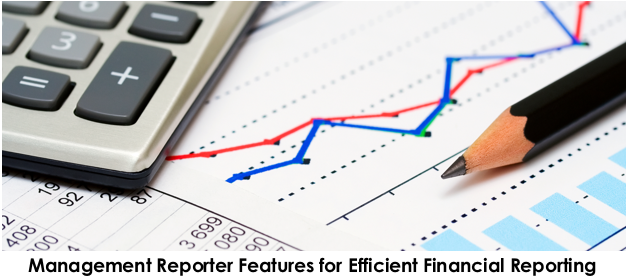
Financial reporting is vital to provide insights to clearly understand your current financial position, track performance, and monitor changes. Efficient financial reporting also aids in the creation of a variety of financial reports that are used by a multitude of users, from managers and shareholders to prospective investors, financial institutions, governments, competitors, suppliers, and customers.
Read More

Topics: ERP, Thought Leadership

Hut, Hut, Hike! Measuring Metrics and Your Team

Posted by Indusa on Sep 4, 2015 6:30:00 AM

Business metrics are used to evaluate the success of an organization and its activities. But even within an organization, not all metrics are created equally. Individuals, teams, and departments all have different metrics they value over others.

For example: Let’s take a look at the Dallas Cowboys and compare it to how different employees or departments in your organization care about different metrics. Tony Romo, the quarterback of the Cowboys, would focus on metrics that he might be interested in including how many successful passes he makes and, how many interceptions occur, and other such metrics.The same can be said for the rest of the players on the team – they all have role-specific metrics that they’re focusing on, even though their teammates might not share the same metrics.

The coaching staff has more over-reaching stats that they need to monitor.  They also have specific metrics to focus on. Even though the offensive coordinator, Scott Linehan, is interested in the same metrics as the quarterback, he also has to focus on other members of the team too. In addition to passing, he also has to focus on blocking, rushing, and other metrics. He’s reviewing passing yards, rushing yards and receiving yards. Then, defensive coordinator, Rod Marinelli, would similarly focus on multiple metrics spanning across the defensive players and measuring sacks, tackles and interceptions.  While head coach Jason Garrett is looking at a summary of offense and defense stats, in addition to win-loss ratios. 

On an even larger scale than that, is Jason Garrett, the head coach. He is interested in individual metrics, offensive metrics, defensive metrics, and metrics of the entire team – such as their win-loss ratio. If you want to take it one step further than that, we can include Jerry Jones. As the owner of the Dallas Cowboys, the top metrics he’s focused on is looking at their profitability and the metrics that tell that story. Even with all the coaches, the defense and offense teams, and individuals on the Cowboys, Jones’ number one priority is how much money they’re making.

Managing data for so many different teams and so many different metrics can be a hassle. Thankfully, with Microsoft Dynamics AX, you never have to run a report ever again! All of the data you need is available to you instantly.

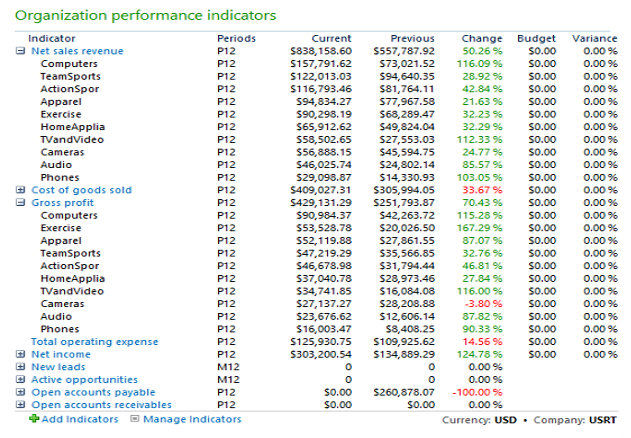
The user-friendly interface allows you to define your own metrics to fit your individual and team needs – allowing employees to better understand their own accountabilities, their department’s accountabilities, and how those accountabilities roll up to higher level organizational performance metrics. Each employee and department can view their own metrics on an easily accessible dashboard. This data can be analyzed, turned into graphs or charts, and exported to other Microsoft applications such as Microsoft Excel. Below are some examples of what Microsoft Dynamics AX would look like. 

Read More

Topics: Business Intelligence, ERP

Moving From JD Edwards to Microsoft Dynamics – The TCO Advantage

Posted by Indusa on Aug 10, 2015 6:30:00 AM
Organizations make huge capital investments in implementing state-of-the-art ERP systems to improve their business productivity and efficiency. However, the actual costs that enterprises incur are the ones associated with the Total Cost of Ownership (TCO). A rough estimate of all the direct and indirect costs along the various stages of the ERP lifecycle is essential for calculating time to value. 
Read More

Topics: ERP

It’s 2015: Do You Know Which Era Your ERP Architecture is From?

Posted by Indusa on Aug 4, 2015 7:00:00 AM

Both a blessing and a curse of technology is that it’s constantly outpacing itself. What that means for your ERP, however, is that the underlying technology powering the system may be woefully outdated. 

Take the instance of JD Edwards World, which was built in the 1980s or JD Edwards EnterpriseOne, which was built in the 1990s, during the dawn of the client-server era. Much has changed and evolved since then, yet these ERPs were built in a time and place where the technology landscape looked vastly different. On the other hand, modern ERPs are offering a completely different technology architecture, making integration, upgrades, and customization much more attuned to today’s business needs. 

Read More

Topics: ERP

ERP in Retail: Personalize to Achieve Customer Delight

Posted by Indusa on Jul 27, 2015 7:00:00 AM

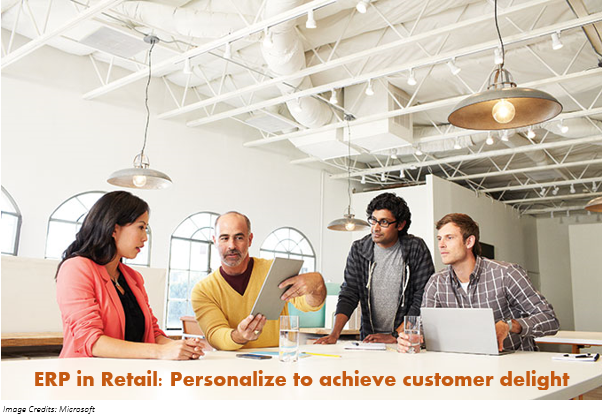
The retail industry is in a state of continuous metamorphosis. Retailers are becoming more global, while dealing with an increasing number of sales channels and logistics alternatives. Software systems, like enterprise resource planning (ERP), help retail organizations utilize modern technologies to support a more collaborative model that enables them to work better with various stakeholders and improve customer satisfaction. IDC predicts that by 2017, three times as many retailers will succeed in explicitly pinning their customer and operations strategies on third-party platform technologies.

Read More

Topics: ERP

Stay Connected to the Indusa Blog

Each week we share compelling content about the latest technology trends. Subscribe to our blog to stay up to date with topics such as CRM, ERP, SharePoint, and Application Management.

Recent Posts

Subscribe to Email Updates