





Enterprise resource planning (ERP) and customer relationship management (CRM) software are both integral aspects of any retailer’s business strategy. With ERP, your business can achieve centralized store management and powerful merchandising. With CRM, employees will be able to delight customers with social listening and service functions. Both systems are equally important in allowing your business to flourish, but more often than not, they operate independently of each other.
So why would you bother trying to integrate an ERP and CRM?
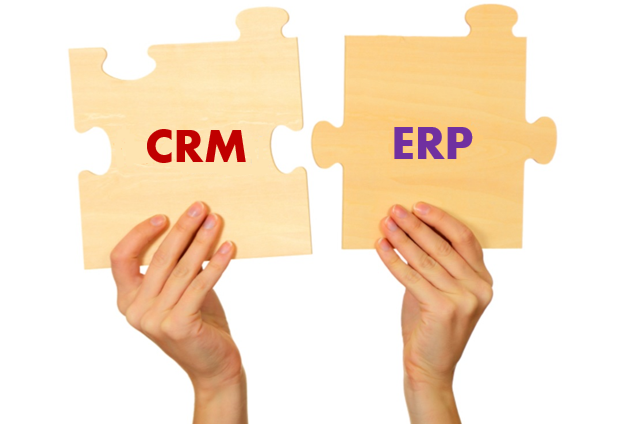
Integrating existing software can seem like a time-consuming and costly challenge if you’re unaware of the potential benefits. The truth is that integration of ERP and CRM systems can provide a compelling return on investment. By integrating ERP and CRM, software retailers can empower employees, connect to customers, and operate with enhanced insights. The marketing, sales, service, and supply chain departments will be able to execute improved functionalities and processes to enhance your business. Listed below are some of the ways integration can benefit your business:
Omni-Channel Management- Achieve unparalleled visibility and control across all of your channels: brick-and-mortar stores, e-commerce, mobile sites, and social commerce.
- Enhance customer convenience by allowing “buy online” and “pick up in store” features.
- Create new opportunities for customer service with integration between the online marketplace and stores.
- Enable ad promotions, recruiting functions, and product quotes online.
- Manage your POS terminals with visual and functional profiles, user interface layouts, and employee permissions.
- Gain insights with consistent and accurate data.
- Ensure critical updates across your organization such as updates to loyalty points, inventory and financial information, and sales orders.
- Manage your staff at store, regional, and global levels depending on business needs.
- Engage in flexible pricing including discounts, coupons, mix-and-match and buy-one-get-one free deals.
- Achieve unparalleled assortment management with creation, scheduling, tracking, item hierarchy, and category management functions.
- Fully integrated online storefront with content management via industry standard tools.
- Enhanced online experiences with search functions that deliver the most accurate content from managed content, authored content, catalogs, and other relevant sources.
- Create personalized content with device recognition and historical click pattern functions.
- Manage your hierarchies, categories, refiners, payments, shopping cart, order fulfillment, shipping, and other e-commerce functions.
- Efficient catalog coding to reduce complexity and confusion.
- Identify trends and offer personalized service with access to real-time, actionable data.
- Maintain comprehensive customer information including contact, service, and order records.
- Implement promotions, discounts, coupons, and deals through social sites.
- Enable recall and redemption through other channels.
- Receive valuable insights through customer data and analytics.
- Create orders and quotes in real-time for customers by using POS order capabilities.
- Accept, fulfill, and track orders.
- Apply and manage tax schemas.
- Manage inventory reservations, and perform price and inventory checks.
- Seamlessly replenish inventory based on schedule or need.
- Gain insights on inventory transfers and intercompany flows with an end-to-end view.
- Manage purchasing, requisition, and replenishment processes.
- Optimize purchasing and replenishment with specifications and replenishment processes.
Above all else, integration enables a seamless view of your organization and streamlines numerous business processes: data no long requires duplicate input in both CRM and ERP – they can communicate across the systems with ease. As a result, customer satisfaction will see a marked increase with the ease and efficiency integration allows service and sales staff, and your business will flourish with the customizability and functionalities you can achieve by integrating ERP and CRM software.
|
|
About the Author - Sarah Van Wambeke Sarah is an avid writer and digital media enthusiast. Here at Indusa, she primarily focuses on content creation and social media management. . |